
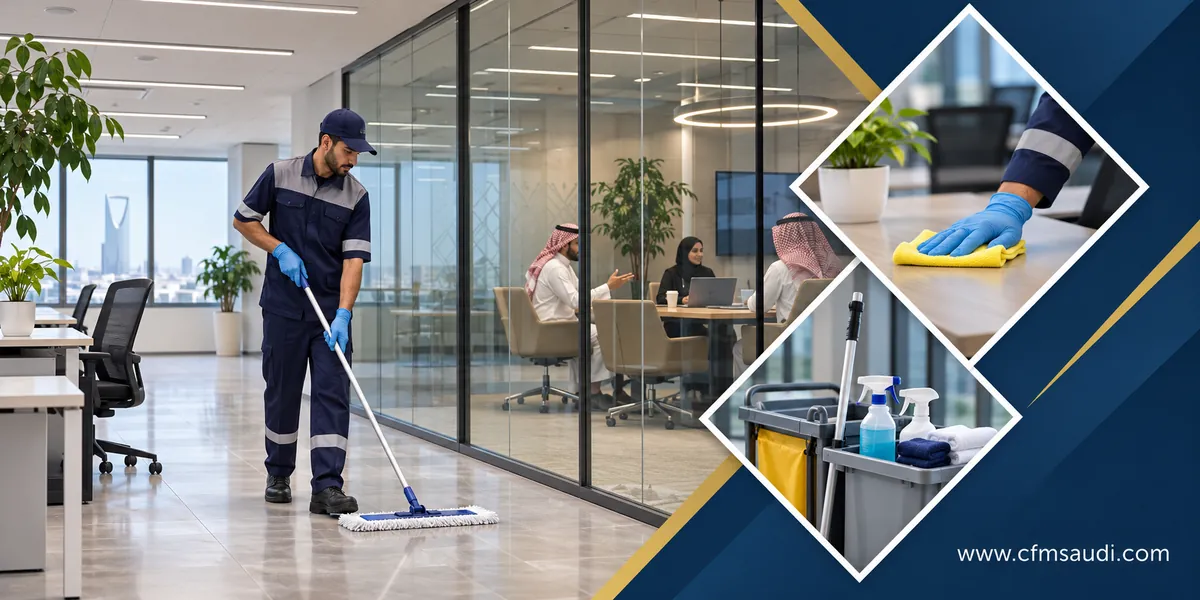
Occupied office deep cleaning needs a sequencing plan as well as a task list. When employees remain on site, cleaning every room at once is rarely practical. Dividing the work into agreed zones can make access easier to manage and help office teams understand which spaces are available.
Before booking deep cleaning in Riyadh, define the intended result and the limits of the work. “Deep cleaning” does not automatically include every surface, appliance or item of equipment.
Divide the office by use and access
Create a simple zone plan: reception, meeting rooms, workstations, pantry, washrooms and storage. Record the time each can be released, the person authorising access and any alternative space occupants can use. Keep customer routes and access needs in view when choosing the sequence.
A whole floor is not always the best unit. Two meeting rooms may be released separately so one remains available, while a small pantry may need a complete closure for an agreed period.
Agree equipment and information boundaries
Clarify how desks are prepared, who moves personal items and which equipment is excluded. Staff should secure documents and follow their organisation’s rules for laptops, monitors and other devices. Cleaning teams should not disconnect equipment, open cabinets or move restricted items without the appropriate authorisation.
List sensitive finishes and any manufacturer instructions the contractor needs. The proposed method should suit the material; a stronger product is not automatically a better solution. Any disinfection requirement should be specified separately with appropriate product instructions and authorised methods.
Build a zone-by-zone work sequence
- Release: the office contact confirms the zone is ready and the agreed preparation is complete.
- Setup: the cleaning supervisor confirms equipment, work boundaries and access controls.
- Delivery: tasks follow the approved scope and product or equipment instructions.
- Inspection: the supervisor checks the finish and records exclusions or defects.
- Return to use: the responsible contact accepts the zone after applicable drying, ventilation and reopening conditions are met.
Do not promise a fixed reopening time before the method and site conditions are understood. Some tasks require more time than the cleaning activity itself.
Separate cleaning defects from existing damage
Record existing stains, scratches, loose fittings and other relevant conditions before work starts. A cleaning service cannot guarantee removal of every mark, particularly where a material is damaged or permanently discoloured. Agree a test area if the proposed method or finish needs assessment.
At handover, distinguish completed cleaning, tasks prevented by access and issues needing maintenance. This gives the office manager a useful action list rather than a vague statement that everything is finished.
Connect the deep clean to routine service
A periodic clean is easier to maintain when the daily office cleaning programme reflects the same room layout and responsibilities. Explain any temporary furniture moves or revised waste arrangements to the routine team.
Review why the work was needed. A heavily used entrance might need a revised daily schedule, while a one-off fit-out creates a different problem. Adjust the routine scope where the evidence supports it instead of automatically increasing deep-cleaning frequency.
Prepare a useful enquiry
Send the floor plan, occupied hours, proposed work windows, target surfaces and any material restrictions. Identify rooms that must stay operational and the person available for handover. Ask Crystal Facilities Management to discuss a phased office deep clean based on those details.