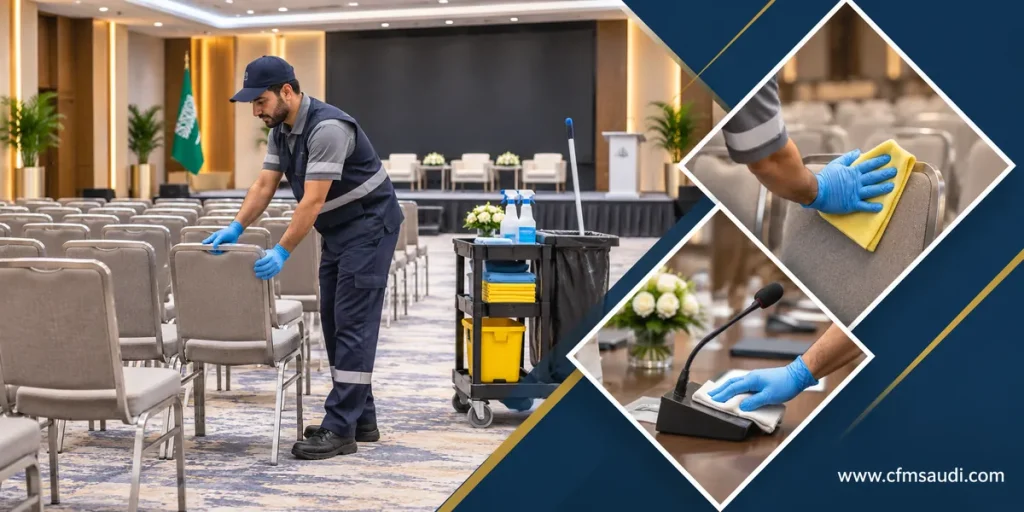


A builders cleaning sign-off checklist should answer one question clearly: which rooms are ready for the next stage, and which still have open actions? A building-wide “clean complete” message can hide unfinished rooms, ongoing trades and items that belong on a construction defects list.
This guide focuses on room release and acceptance after after-builders cleaning in Riyadh. It complements the construction programme; it does not replace the contractor’s completion or safety procedures.
Identify the stage being accepted
Agree whether the visit is a preliminary clean, a detailed clean after trades finish or a final presentation clean before occupation. These are different scopes. If cutting, drilling or decorating continues after a detailed clean, newly generated residue should not be confused with incomplete original work.
Record the agreed stage on each room sheet. Include the floor, room number, date, supervisor and person authorised to accept the area. A simple room identifier is more dependable than descriptions such as “the room near reception”.
Confirm readiness before the team starts
The site contact should confirm that the room can be released under the project’s arrangements. Note remaining trades, available services, protected surfaces and material information needed for cleaning. Specialist or unidentified residues require assessment rather than an improvised removal method.
Decide who removes construction waste and packaging. Ordinary cleaning, debris removal and specialist waste handling are not automatically the same service. Include any relevant coordination with Riyadh waste management services in the brief.
Use a checklist that separates outcomes
- Accessible surfaces: inspect the agreed floors, ledges, doors and fittings for the specified finish.
- Glazing: identify which faces and heights are included; note scratches separately from removable marks.
- Joinery: distinguish exposed surfaces from cupboard interiors and protected components.
- Washrooms: check the cleaning scope without treating the visit as a plumbing commissioning test.
- Waste: confirm material has reached the agreed collection point.
- Exclusions: record anything outside scope or inaccessible.
Use the material supplier’s instructions and approved method when judging what cleaning can achieve. Do not require a contractor to remove protective films, labels or finishes without confirming that removal is authorised.
Keep defects and cleaning actions in separate columns
A chipped tile, damaged seal or paint defect belongs to the responsible construction trade. A missed accessible surface belongs to the cleaning action list. When an observation is uncertain, record it for joint review rather than assigning blame during the inspection.
Photographs can support the record if the site permits them. Use consistent room references, and avoid images of sensitive plans or people who have not agreed to be photographed.
Control re-entry after acceptance
Agree what happens when another trade re-enters a signed-off room. The room may need another inspection or an additional presentation clean. Recording re-entry helps the project manager understand why a previously accepted area no longer meets the expected finish.
Keep accepted, pending and re-opened rooms visible on the programme. The list should show the next action, owner and date, not just a coloured completion percentage.
Close the handover with evidence
Walk the rooms with the agreed contact, record outstanding items and confirm any return visit. Send Crystal Facilities Management your room schedule and project stage to discuss a cleaning scope aligned with the handover programme. Include the planned occupation date and remaining trades so the quotation reflects the real sequence.