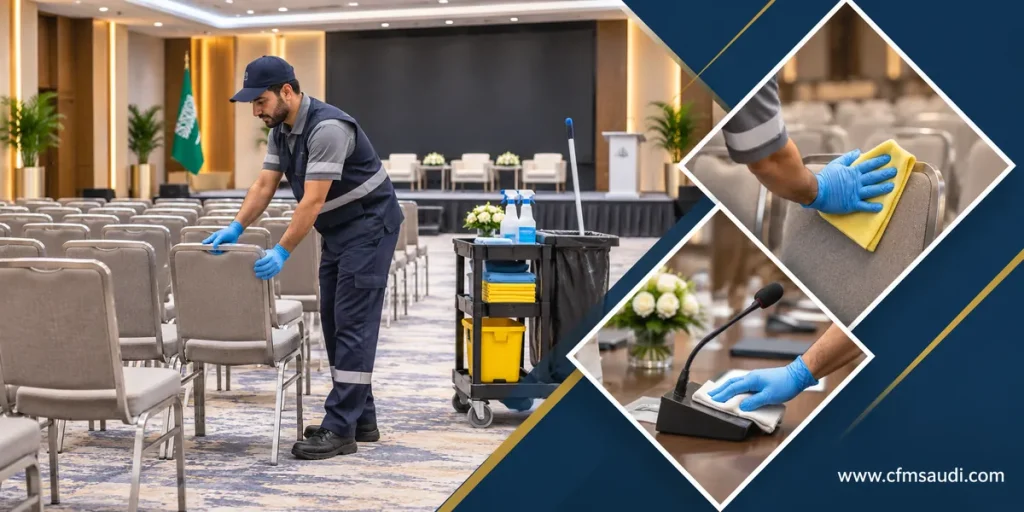


An effective office cleaning schedule follows how people use the building. A reception busy at opening time, a pantry busiest after lunch and a meeting floor with back-to-back bookings need different service windows. Copying a generic daily checklist can leave the right task happening at the wrong time.
For office cleaning in Riyadh, begin with occupancy and access, then agree tasks and staffing. The aim is a workable timetable that supports the office without unnecessary disruption.
Map the office day before assigning shifts
Ask reception, office management and the cleaning supervisor to mark arrival peaks, meeting periods, lunch breaks and closing arrangements on one timetable. Include hybrid-working patterns and any teams operating outside normal hours. Confirm which areas require an escort or must remain untouched.
Observe actual use for an agreed review period. A room labelled “training” may be empty most days but accommodate a large group twice a week. That difference should appear in the service plan.
Use three layers of work
Opening or closing tasks
Place activities needing uninterrupted access into an agreed quiet period. Examples include routine floor care and servicing available desk areas under the office’s clear-desk rules. Confirm the time by which each zone must be ready, rather than simply specifying that a cleaner starts at a particular hour.
Daytime checks
Plan short rounds for presentation, bin levels and washroom supplies where needed. These checks should identify what requires attention, not create unnecessary work in occupied rooms. Keep a clear route for reporting spills, blocked access or maintenance defects to the responsible person.
Periodic tasks
Schedule detailed work separately from daily rounds. Carpet care, upholstery cleaning and work behind movable furniture need suitable methods, permissions and enough time before the area returns to use. Agree a periodic deep-cleaning scope where routine service will not cover the requirement.
A practical schedule format
- Zone: identify the room or floor, not just “office”.
- Task: state the surface and the expected outcome.
- Window: record when access is available and the completion deadline.
- Frequency: use a site-specific interval or an agreed trigger.
- Owner: identify the team and supervisor.
- Exception: explain how missed access and changed bookings are recorded.
For example, a meeting-room reset can follow the booking calendar rather than a rigid hourly round. If the meeting overruns, the log should show that the task is pending, with the next available window agreed.
Allow for realistic travel and setup time
Do not allocate every minute of a shift to cleaning surfaces. Staff also collect supplies, move between floors, arrange access and report issues. A timetable that ignores those activities may appear efficient on paper but repeatedly miss completion times.
Discuss cover for absence and unexpected demand, including who can authorise additional work. A clear escalation route is more useful than assuming the team will absorb any change without affecting the rest of the schedule.
Review the pattern, not just the checklist
At review meetings, compare missed-access records, complaints and inspection findings by zone and time. If the same issue returns every afternoon, change the timing or investigate the cause. Repeatedly adding the same task to a checklist will not resolve an access problem.
Share your office hours and layout with Crystal Facilities Management to discuss a schedule connected to your real working day. For several linked services, explore facilities management in Riyadh.