
A commercial cleaning scope of work turns “keep the building clean” into a service that both the customer and contractor can check. For a Riyadh office or mixed-use property, it should describe the rooms, tasks, timing, supplies and expected finish before a price is agreed. Floor area alone does not explain how a building is used.
Use this practical brief when discussing commercial cleaning in Riyadh. It is a planning template, not a substitute for a site survey or your final contract.
Start with an area register
Walk the property and list each zone separately: entrance, reception, workstations, meeting rooms, washrooms, pantry, stairs and service areas. Record floor finishes, approximate size, normal occupancy and access restrictions. A small busy pantry may need more attention than a much larger room used once a week.
Mark landlord-controlled areas clearly. If the building manager looks after shared lifts or the external pavement, your tenant cleaning scope should not silently include those spaces. Also identify rooms containing confidential records or equipment that cleaners must not touch.
Describe tasks with a result and a timing
“Clean floors” leaves too much open to interpretation. Write down the surface, the activity, the agreed frequency and the inspection standard. The contractor can then propose suitable methods and equipment for the finish.
- Reception: remove visible dust from accessible counters before opening; check presentation during agreed rounds.
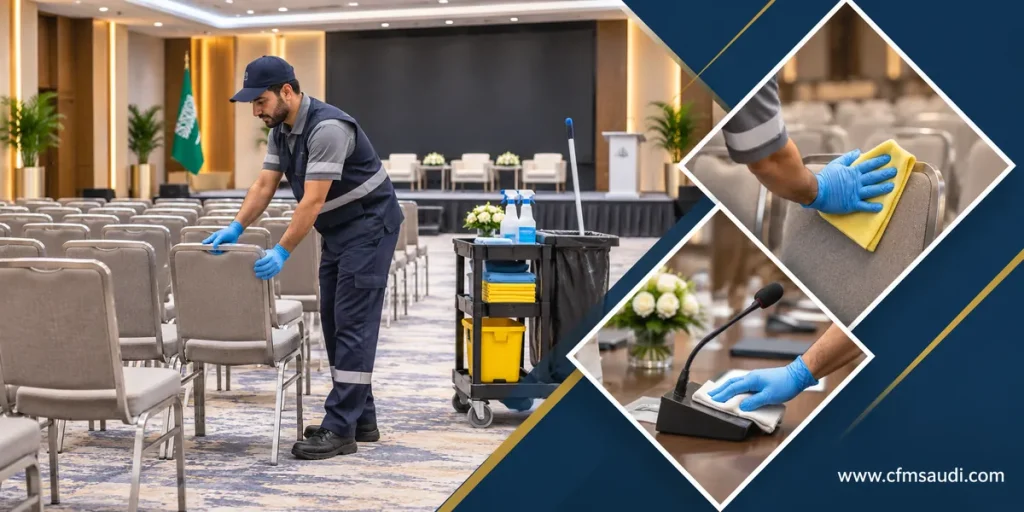
- Meeting rooms: service available rooms after booked sessions; report rooms that could not be accessed.
- Washrooms: agree attendance windows, consumable checks and an escalation route for defects.
- Pantry: specify accessible surfaces and waste handling; identify any appliance interiors excluded from routine cleaning.
These are examples to adapt. They are not universal frequencies: staffing, visitor numbers and working hours should shape the actual schedule.
Separate routine and periodic work
Keep the regular contract distinct from carpet extraction, high-level cleaning, detailed washroom work and other periodic tasks. List each periodic activity, its proposed interval and whether it is included or priced separately. If you need deep cleaning in Riyadh, define the intended areas and available closure time rather than relying on the phrase “deep clean”.
Allocate supplies, access and waste responsibilities
Record who provides cleaning materials, washroom consumables, storage, water and approved power access. Explain key or pass collection, arrival checks, alarm arrangements and the person who authorises overtime. State where waste is taken and whether onward collection forms part of the agreement.
For out-of-hours work, confirm a named building contact. A cleaner waiting for an escort cannot deliver the same workload as one with uninterrupted access, even when the paid shift length is identical.
Make acceptance and changes manageable
Agree a short inspection checklist with examples of an acceptable finish. Record missed tasks, reasons, corrective actions and a recheck date. Avoid treating damage or an ongoing leak as a cleaning failure: route it to the appropriate owner.
When occupancy, rooms or hours change, update the scope version and pricing assumptions together. Keep the previous version so both sides can see what changed. This is particularly useful when services sit within a wider Riyadh facilities management contract.
What should you send for a quotation?
Send the area register, operating hours, task schedule, periodic-work list and access restrictions. Include photographs where you have permission and identify any unresolved questions. Ask Crystal Facilities Management to review your cleaning brief so the proposed service can be matched to the actual property.