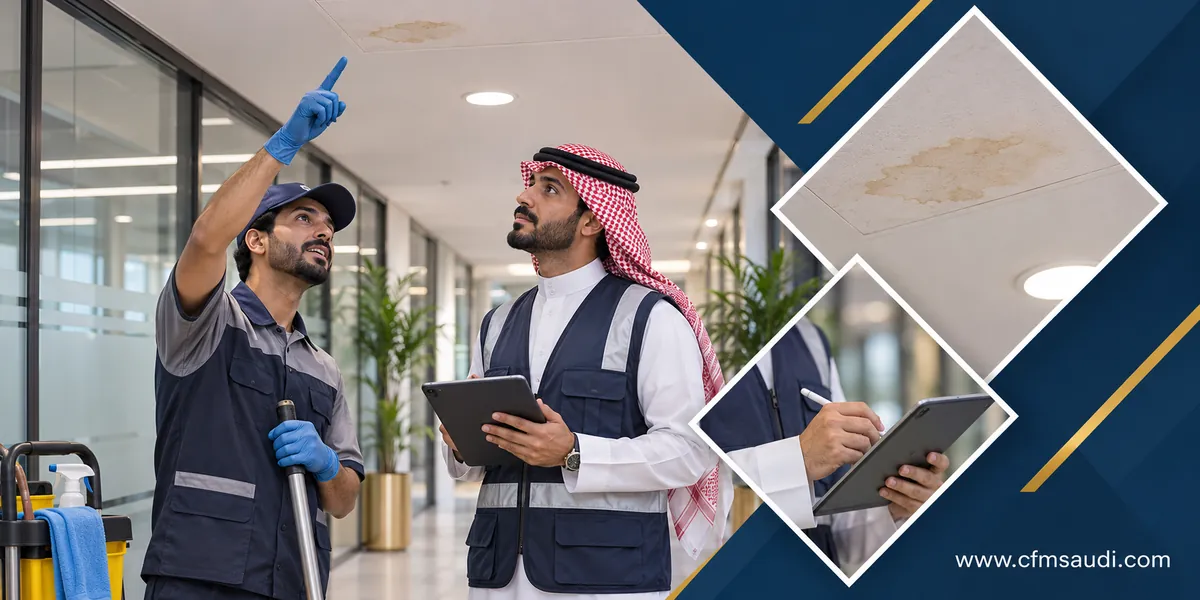
A cleaning maintenance handover connects the person who notices a building issue with the team authorised to investigate it. Without that connection, the same stain, leak or damaged fitting can appear on several cleaning reports while nobody owns the underlying action.
The process matters whether you use one integrated provider or separate Soft FM and Hard FM teams. The purpose is to pass useful observations across, not to turn cleaners into maintenance technicians.
Define what should be reported
Agree examples with the building manager: a recurring wet patch, a damaged fitting, a door that no longer closes normally or a consumable dispenser that does not work. Staff should describe the observation rather than diagnose a technical cause.
“Water visible below the pantry sink at 10:15” is a useful report. “Pipe failure” may be an unsupported conclusion. The authorised maintenance team can investigate the cause through its own procedures.
Make the first report actionable
- Location: building, floor, room and a precise reference.
- Observation: what was seen, without speculative diagnosis.
- Time: when it was noticed and when it was reported.
- Operational impact: which agreed cleaning task or area is affected.
- Evidence: an approved photograph or other reference, if permitted.
- Contact: the supervisor who can clarify the report.
Follow the site’s urgent reporting procedure where it applies. An ordinary ticket queue should not replace that route. Staff should not touch equipment or attempt repairs outside their authorised role.
Assign one action owner
The helpdesk or nominated coordinator should allocate the issue to the responsible team and provide a reference number. The person raising it needs to know that the report has been received, even if the technical investigation will happen later.
Where the landlord owns the asset, record that dependency. Forwarding an email is not the same as confirming that the responsible party has accepted the action.
Keep cleaning and repair actions separate
A cleaning response may address a visible consequence while maintenance investigates the cause. Record both activities independently. Otherwise a cleaned area can lead the ticket to be closed even though the defect has not been resolved.
For example, a recurring mark should remain a maintenance observation until the responsible team has assessed it. The cleaning record can still show which agreed surface-care tasks were completed.
Define closure evidence
The responsible technical team should document its action and any conditions affecting return to use. The cleaning supervisor can then confirm whether related cleaning work remains. The customer or site representative should use the agreed acceptance process for closure.
If the observation returns, link the new report to the earlier ticket. That history is more useful than several unrelated records that make a repeated problem look like isolated events.
Review the handover process
At the service meeting, look at unassigned tickets, repeated reports and actions waiting on another party. Ask whether location information, ownership or access arrangements caused delay. Use those findings to improve the reporting process.
For a wider facilities management service in Riyadh, agree these handovers during mobilisation. Discuss your current reporting arrangements with Crystal Facilities Management and share examples of issues that repeatedly fall between teams.