
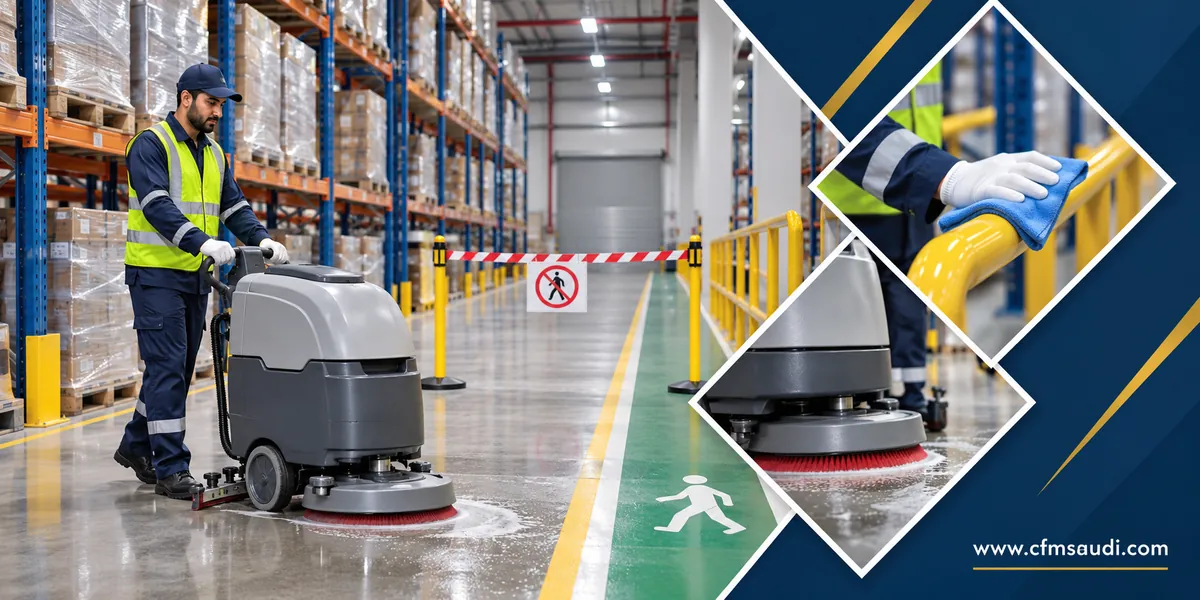
A warehouse cleaning access plan decides where the cleaning team may work and when that area can be released. It is different from a cleaning frequency schedule. A task may be due every day, but it cannot be delivered as planned if the aisle is continuously occupied by goods movement.
For facilities discussing facilities management in Dammam, the warehouse operator and cleaning supervisor should agree access arrangements before assigning the work. This guide covers coordination, not forklift operation or industrial safety procedures.
Map operational zones
Separate receiving, dispatch, storage aisles, packing areas, offices and welfare spaces. Record the normal activity in each zone, the permitted cleaning window and the person who can release it. Include any specialist or restricted areas that need a separate assessment.
A single instruction to “clean the warehouse floor” does not explain whether work includes beneath racking, occupied loading areas or external yards. Draw those boundaries clearly in the scope.
Use the operator’s release procedure
The warehouse operator should determine how work is separated from vehicle and pedestrian activity under its own procedures. Cleaning staff should not assume an aisle is available because it appears quiet. A named contact must confirm the agreed access arrangements.
When the activity changes, pause and follow the site’s reporting route. The plan should identify who can authorise a revised window and who communicates that change to the affected teams.
Match the work window to the task
Consider setup, movement of approved equipment, the cleaning activity and any conditions that must be met before the area returns to use. Do not allocate only the machine’s operating time. The proposed method and floor requirements should determine the full window.
- Receiving areas may need coordination after a delivery period.
- Dispatch zones may require a different window from storage aisles.
- Packing stations need clear rules for materials and equipment.
- Offices and welfare rooms can follow their own access schedule.
- Restricted or specialist areas should remain outside routine work unless expressly included.
Separate ordinary cleaning from specialist incidents
Unknown residues, damaged containers or hazardous materials should be reported through the site’s procedure. A general cleaning contract does not authorise staff to handle every substance found in a warehouse. Agree the limits and escalation route before the team starts.
Similarly, cleaners should not move stock, operate handling equipment or alter racking to gain access unless those activities are explicitly authorised and appropriately managed.
Record missed access without losing the task
Use a short exception log with the zone, planned time, reason access was unavailable and agreed next window. This makes the effect of operational changes visible. It also helps distinguish a missed cleaning task from a task the operator could not release.
At shift handover, identify open zones and any changed priorities. Avoid telling the next team only that “the warehouse is nearly done”; they need exact locations and remaining actions.
Review the plan with operations
Compare recurring access delays with delivery and dispatch patterns. If the same aisle is repeatedly unavailable, change the window or work sequence rather than marking the task complete on paper.
Share your Dammam warehouse layout and operating windows with Crystal Facilities Management. Include the proposed areas, floor information and operator controls so the cleaning brief can fit the site’s actual movement of goods.